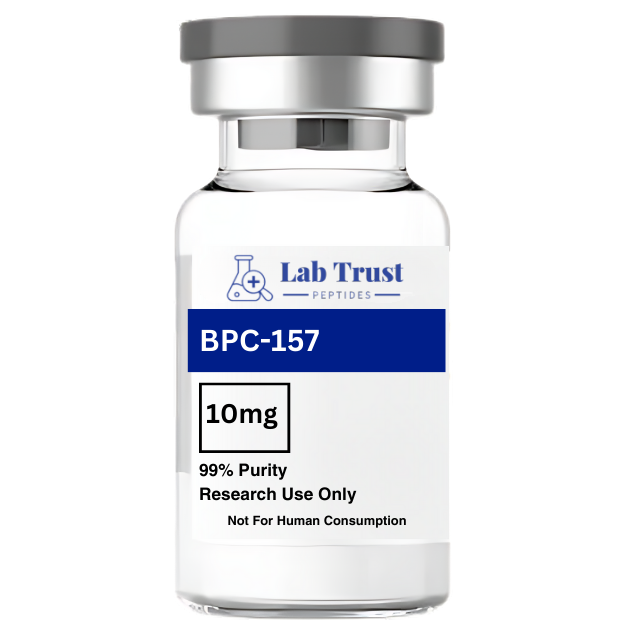
BPC-157 10 mg — Research Peptide (Gastric Protein Fragment)
Original price was: $74.99.$59.99Current price is: $59.99.
Limited Batch Release — Only While Stock Lasts
• 99% Purity • Research Use Only
Buy 3, save 10% • Buy 5, save 15%
📘 Beginners Guide to Peptides (52-page eBook) — FREE ($29 value) with every order
High-purity laboratory peptide supplied with certified COAs and independent third-party testing documentation for advanced research use.
Discount per Quantity
| Quantity | Discount | Price |
|---|---|---|
| 3 - 4 | 10% | $53.99 |
| 5 + | 15% | $50.99 |
Uncompromising Quality Control
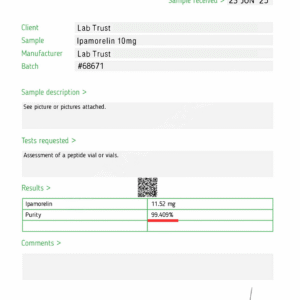
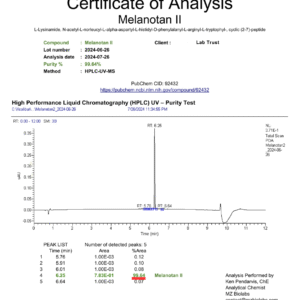
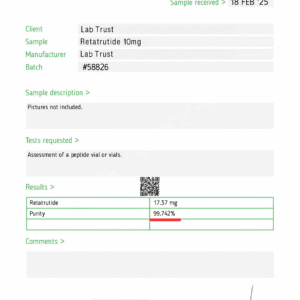
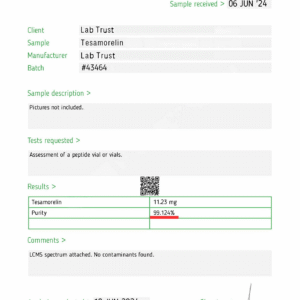
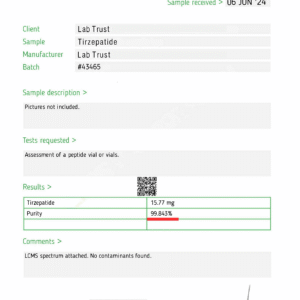
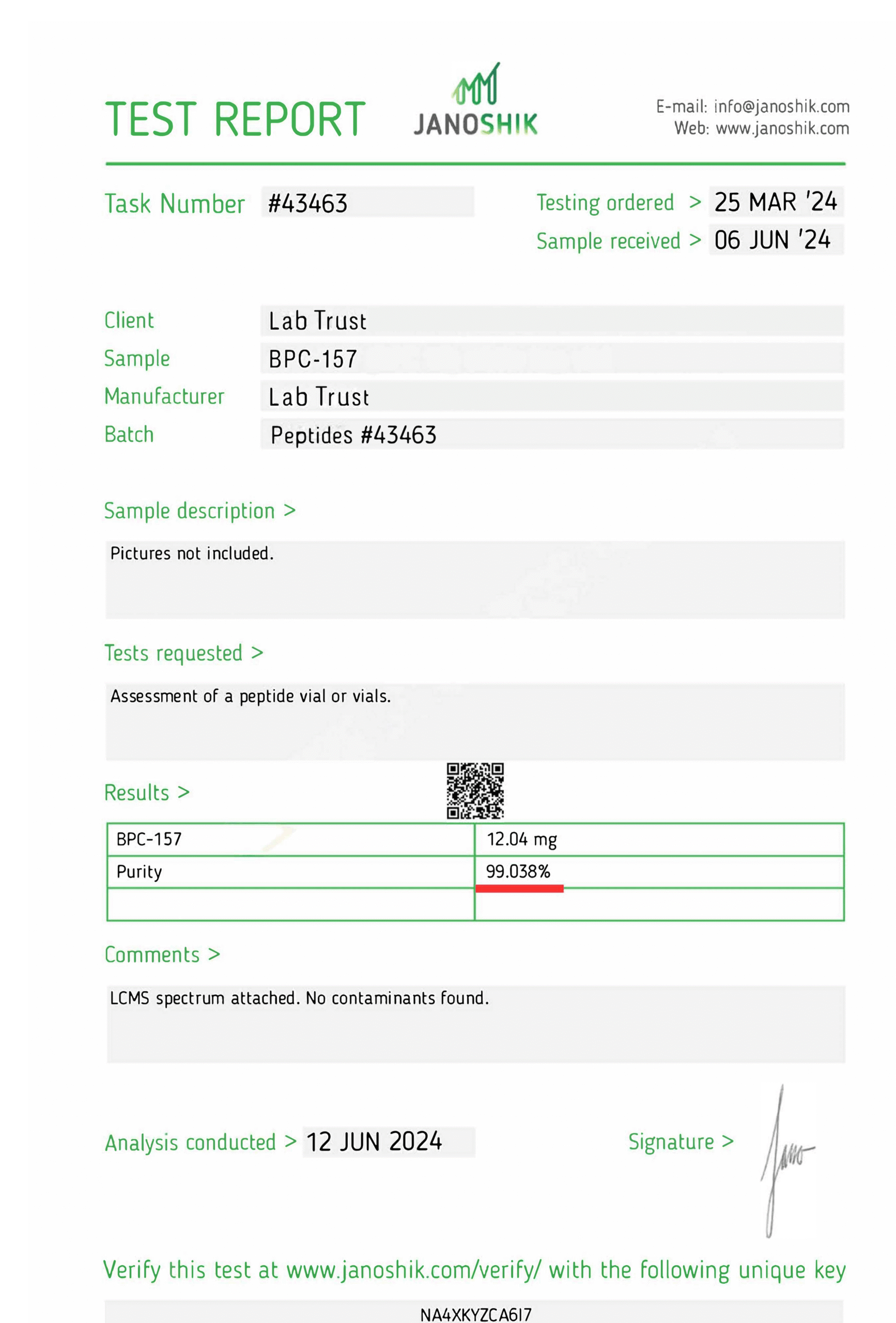
At Lab Trust Peptides, quality is verified through independent third-party analytical testing conducted on each production batch. Every peptide is supplied with complete Certificates of Analysis (COAs) confirming identity, purity, and batch consistency.
Advanced analytical procedures — including LCMS screening, heavy metal analysis, endotoxin testing, and sterility verification — are routinely performed across commonly studied compounds. Randomized full-panel audits support consistent analytical standards and reproducibility across supply.
Quality Comparison
| Feature / Testing Standard | Lab Trust Peptides | Other Labs (Avg.) |
|---|---|---|
| Standard COA (Qualitative & Quantitative) | ✔ Included with every batch | ✖ Often incomplete |
| LCMS Screening | ✔ Available on most batches | ✖ Rarely provided |
| Heavy Metals, Endotoxin & Sterility Panels | ✔ Conducted with ongoing verification | ✖ Often not performed |
| Batch-to-Batch Testing | ✔ Required | ✖ Inconsistent |
| Quality Assurance Process | ✔ Documented analytical controls | ✖ Variable oversight |
BPC-157 — Research Overview
BPC-157 is a synthetic 15-amino-acid peptide derived from a partial gastric protein sequence. It is studied in laboratory environments investigating peptide-mediated signaling pathways, cellular responses, and biological processes within controlled experimental systems.
Preclinical research models have explored its interactions with angiogenic signaling, tissue response pathways, and receptor-associated biological mechanisms in small-animal and in-vitro studies.
Research Context Reported in Scientific Literature
Published preclinical investigations have examined BPC-157 in models evaluating cellular signaling, inflammatory pathway interactions, and tissue response mechanisms. Observations are model-dependent and exploratory.
- Musculoskeletal tissue models: Investigation of structural signaling pathways.
- Inflammatory signaling research: Evaluation of biological pathway interactions.
- Gastrointestinal model systems: Study of peptide activity in digestive research environments.
- Extracellular matrix studies: Examination of collagen-associated processes.
- Neural model investigations: Analysis of cellular signaling responses.
These observations are exploratory and not conclusive.
Format & Handling
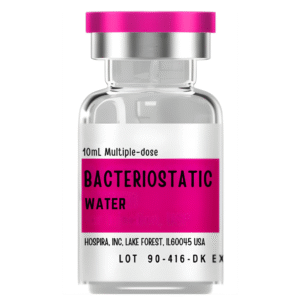
Supplied in sterile laboratory glass vials containing lyophilized peptide material. Reconstitution with bacteriostatic water or appropriate laboratory solvent is required prior to research use.
Handling and storage should follow institutional laboratory protocols to maintain stability, purity, and analytical integrity.
Trusted by 15,000+ Researchers
Consistent results. Verified documentation. Reliable cold-chain delivery.

“Outstanding purity & consistency. COA documentation is thorough and cold-chain shipping protects product integrity.”

“Exceptional quality control & customer service. Same-day shipping supports time-sensitive research work.”

“Reliable supplier with verified 99%+ purity. Excellent value for high-end research applications.”
Frequently Asked Questions (Before You Order)
We offer free cold-chain shipping within the USA, and most orders arrive within 2–4 business days.
You will receive your USPS tracking number within 24 hours after successful payment.
Every batch goes through detailed testing, and we provide Certificate of Analysis documentation. Testing may include purity verification, LCMS screening, heavy metals analysis, endotoxin analysis, and sterility testing.
You can pay with bank transfer, crypto or credit card using the secure online checkout.
Due to the nature of these products, all sales are final and we cannot accept standard returns. However, if any product comes back with a purity of less than 99%, we will provide a full refund, no questions asked.
Lyophilized powder should be stored at -20°C. Reconstituted product should be stored at 2–8°C. Protect from light, moisture, and heat, and avoid repeated freeze-thaw cycles.

USA-Based Supply

All Orders Tracked

Fast Support

99%+ Purity
Intended Use: Research use only.
Not for human consumption, medical, veterinary, or diagnostic use. Research findings are preliminary and do not imply safety or efficacy.
Related products
5-Amino-1MQ 50mg — Metabolic Research Peptide
Price range: $127.49 through $149.99